

Anyone familiar with CBA knows the controversy over Guangdong’s roster decisions this season has raged from the regular season into the playoffs. Two promising young players, who earned significant minutes during the regular season and drew praise for Du Feng’s development of youth, failed to even make the 12-man roster come playoff time. What did Chen Jiazheng and Wang Hongze do wrong to get completely shelved? Many fans criticize Du Feng for being too conservative and wasting talent, while others argue he had no choice. The truth is far more complicated than it appears on the surface.
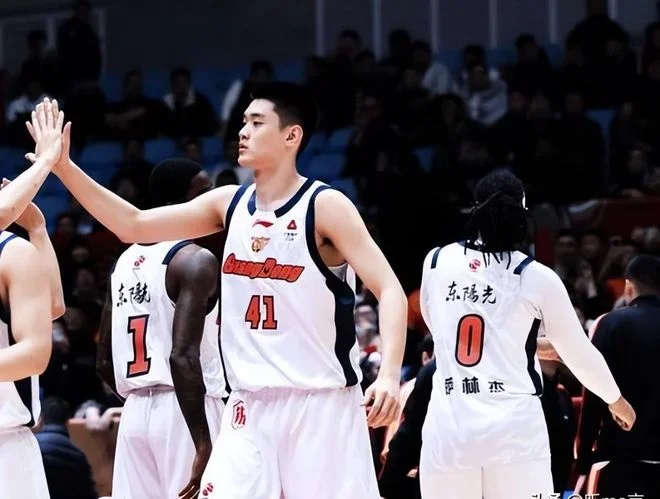
During the first stage of the CBA season, Guangdong’s bench was inconsistent, forcing Du Feng to thrust these two rookies into the lineup. He was only testing the waters, expecting little, but they surprised the entire league. They showed no fear, attacking the basket aggressively and defending harder than veterans. Their fearless energy excited the crowd.
I rewatched Guangdong’s game against Beijing Control. Chen Jiazheng hit a clutch game-winner in the final minute, calm and steady, sending the home crowd into a frenzy. Regular season stats were solid: Chen averaged 13.3 minutes per game, Wang even more at 15.5 minutes, and even started once. For CBA rookies, that’s a strong foundation. No one predicted such a dramatic reversal.

By the second stage, both had disappeared from the rotation. Minutes plummeted, often sitting the entire game without even warming up, and frequently missing the roster entirely. Fans were baffled. Why bench players who were performing well? Come playoffs, both were left off the 12-man squad, reduced to spectators.
Criticism immediately targeted Du Feng for suppressing young talent and being overly conservative. Some argued the coach has the right to choose his roster, but young players need game minutes to develop, especially high-intensity playoff experience that practice can’t replicate. Burying two promising players on the bench is a waste. After Guangdong’s championship hopes fell short, this became a major point of criticism against Du Feng.
Looking at Du Feng’s coaching history reveals the decision wasn’t about suppressing youth. Du Feng himself came through Guangdong’s system, winning 7 CBA titles, a Finals MVP, and as a coach, three consecutive championships and Coach of the Year awards. He demands perfection from himself and his team. Benching these two wasn’t a rash decision; it resulted from multiple factors.
The most direct reason: their execution wasn’t up to playoff standards. Playoff intensity is a different level from the regular season; one small mistake can change the game’s outcome. Du Feng knows this too well to gamble with the team’s results. While they looked impressive in the first stage, their weaknesses were glaring.
Chen Jiazheng struggles with defensive positioning and often gets caught out of position. Under high pressure, his passing becomes erratic with turnovers. Wang Hongze forces shots too often, ignoring team offensive sets. These flaws are manageable in the regular season but become major liabilities in the playoffs.
Another underlying factor: their training performance failed to meet Du Feng’s standards. Guangdong, as a traditional powerhouse, has rigorous training demands. Internal sources revealed that neither player’s attitude nor performance in practice met expectations.
Du Feng is known for his work ethic. He built his playing career on hard work, and as a coach, he demands even more from young players. He has always said that young players wanting to establish themselves at a club like Guangdong must put in several times more effort than others. Lackluster training inevitably leads to distrust on the court.
The core reason remains the pressure of results forcing conservative choices. Guangdong entered the season with championship aspirations, but poor signings left the roster weaker than rivals like Beijing and Shanghai. Du Feng carried enormous pressure to deliver results for the club.
In such circumstances, any coach would prefer experienced veterans. Veterans have seen every situation, stay calm in high-pressure moments, and execute reliably, minimizing mistakes and losses. Benching the young players was an unfortunate but necessary choice under championship pressure.
So while Du Feng appears conservative, he can’t be fully blamed. Guangdong’s weak recruitment left no room for error. A mid-tier team might afford to develop youth, but not a title contender. This episode highlights the constant dilemma for CBA giants: balancing championship contention with youth development.
Du Feng’s choices may impact Guangdong’s future for years. As veterans age and decline, consistent failure to give young players experience will lead to a hollow core, making future title runs impossible.
For Du Feng, the biggest challenge ahead is balancing winning now while cultivating the next generation. Relying solely on veterans is a recipe for eventual decline, even for a dynasty.